



Genesis
The development of the Principles is a Member State-led effort, guided by existing United Nations multilateral frameworks and agreements. A group of leading countries came together at the 2024 Climate Mobility Summit with the shared objective of advancing greater alignment and collective action on climate mobility. Their efforts have been supported by the Global Centre for Climate Mobility (GCCM), which has served as a dedicated technical secretariat and is now led by Ambassador David Donoghue of Ireland—the principal architect of the SDGs.
The Principles draw upon the growing body of evidence and research on climate mobility, including findings from the latest IPCC Assessment Report, as well as the broad array of policy instruments reflected in global and regional frameworks and guidance emerging from international courts. They are further informed by the insights, priorities, and recommendations generated through the GCCM’s regional engagement, including extensive data collection and stakeholder consultations across the Pacific, Africa, and Latin America and the Caribbean, involving more than 1,000 entities and organizations.
The process of developing the Principles has been characterized by extensive consultations and sustained diplomatic engagement with more than 130 countries, affirming their broad relevance and applicability across diverse regional and national contexts. The Principles have also been shaped by agreed inputs to the United Nations General Assembly process towards the adoption of the first-ever UN Declaration on Sea Level Rise. In addition, they have benefited from the contributions of the Ocean Rise and Coastal Resilience Coalition, launched with the support of more than 450 mayors on the margins of the Third United Nations Ocean Conference (UNOC3).
Status of Endorsement
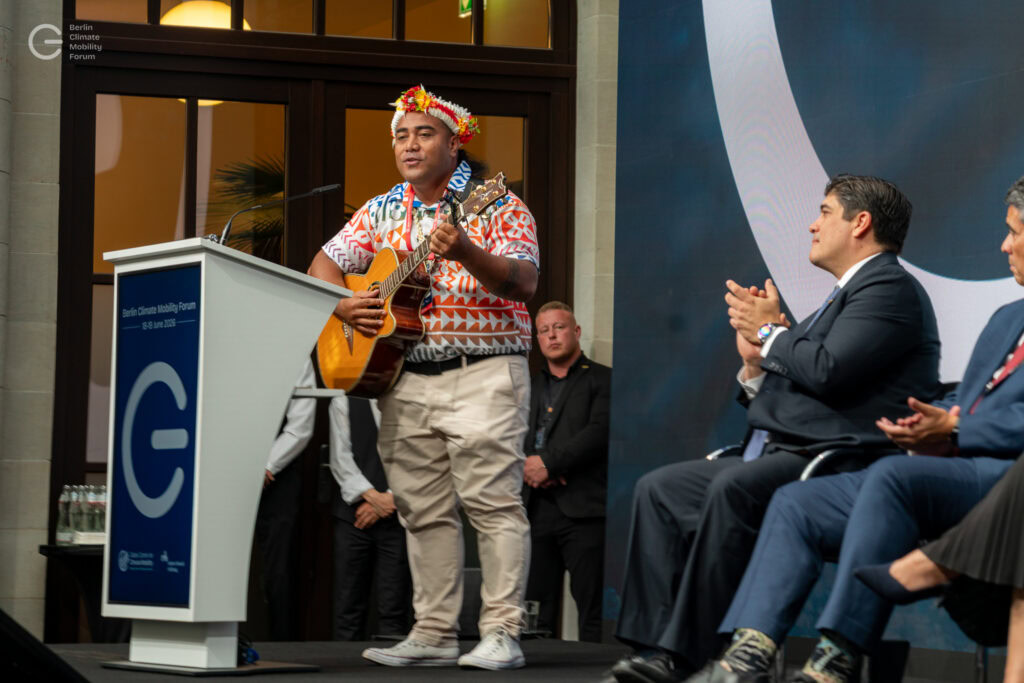
As of 2 July, fifty-four (54) Member States have formally endorsed the Principles. We anticipate that dozens more will do so in the weeks ahead. The depth and breadth of support already garnered are evidenced by the fact that a majority of endorsing countries confirmed high-level participation in the Berlin Climate Mobility Forum, held on 18–19 June 2026.
Roadmap beyond the BCMF
Following the establishment of Member States’ support for and ownership of the Principles, the next phase will be to launch a broad-based and inclusive stakeholder engagement process involving champion and endorsing Member States, United Nations partners, experts, civil society organizations, and affected communities. This process will aim to design an implementation roadmap for the Principles through the development of the Climate Mobility Adaptation Agenda.
To translate the Climate Mobility Principles into a practical framework for action, the GCCM proposes a regionally anchored and inclusive multi-stakeholder process to develop the Climate Mobility Adaptation Agenda (CMAA). The objective of the CMAA is to create a comprehensive blueprint for action capable of informing multilateral processes, including the development of the next global development agenda and ongoing engagements under the UNFCCC.
The CMAA will be developed in collaboration with a diverse range of stakeholders across sectors to identify priority areas for action and advance concrete proposals and partnerships that can enable just community transition and support effective adaptation responses.